About us

About Thinklab Foundation Africa

We are a Ugandan non-profit, founded in 2026. We build community STEAM labs where young people aged 12 to 28 think, create, collaborate and invent solutions for the challenges in their own communities.

Who we are

Talent is everywhere, but the tools to use it are not

Thinklab Foundation Africa works where science, technology, engineering, arts and mathematics (STEAM) meet youth employment. Each Thinklab is a fully equipped lab and maker space for high school, TVET and university students, and for young people who are out of study. It is open to all on equal terms.

We do not teach people how to innovate. We find young innovators, give them a space and guide them from a real problem to a prototype, a patent and a product. Companies, schools, governments and development agencies partner with us for challenges, research and talent.

We start in Uganda and will open our doors, step by step, to the rest of Africa.
A message from our Executive Director

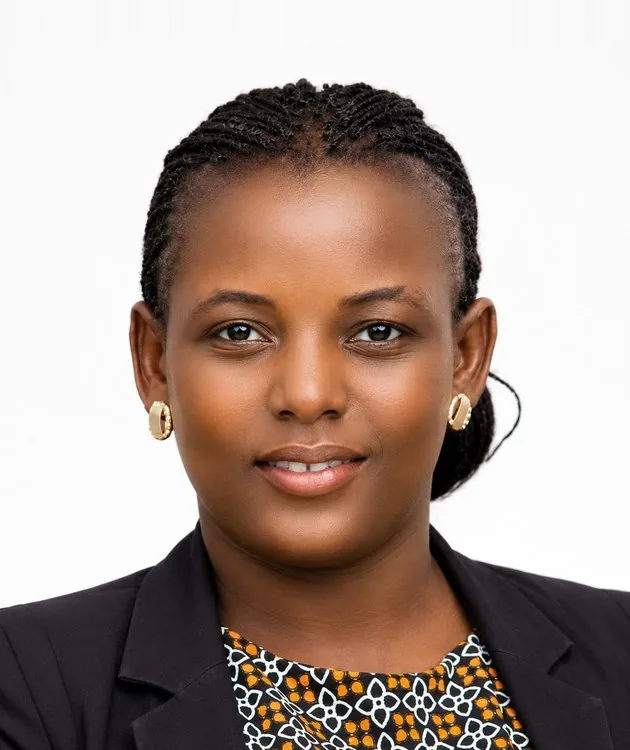
Nanteza Ruth Ssebagala, Executive Director of Thinklab Foundation Africa
A message from our Executive Director

“The answers to Africa’s problems are not only in parliament or in universities. They are with the young man or woman in the local community. Our job is to find them, equip them, give them the resources and challenge them to dream bigger.”

Nanteza Ruth SsebagalaExecutive Director, Thinklab Foundation Africa
Our vision

The Africa we are working towards

An Africa where every young person, wherever they live, has the tools, skills and confidence to solve their community’s problems through STEAM, and where the continent’s next breakthroughs are conceived and built by its own young people.

Our mission

What we do to get there

To turn curiosity into capability, and capability into livelihood, by building solar-powered community STEAM labs where young people aged 12 to 28 solve real problems in their communities; coaching teachers and mentors; anchoring learning to the national curriculum; and opening pathways into further study, enterprise and work.

Our values

Six values guide how we work

Our values make us who we are and drive our mission.

Curiosity

Questions come first. We protect the space to ask, test and wonder.

Community

Labs are owned with communities and built around problems people can walk to.

Creativity

We value original answers over memorised ones, and making over copying.

Innovation

We test, measure and improve, using the same method we teach.

Character

We act with integrity with every shilling, every learner and every partner.

Hope

The next breakthrough can come from any young person, anywhere in Africa.

Who we serve

Every young person aged 12 to 28, wherever they live

A Thinklab is a place where young people think up solutions to the challenges in their own communities, whether they live in a city, a town or a village.

High school students

Learners in lower and upper secondary school.

TVET students

Trainees in technical and vocational education and training.

University students

Undergraduates and young graduates in any field.

Young people out of study

Those not studying right now, often because of uncertainty.

We are an equal opportunity organisation. We never segregate any young person on the grounds of gender, religious affiliation, economic status or disability.

What we respond to

Five linked challenges facing young Africans

Africa’s young people are its greatest strength, yet much of their talent goes unused. Here is the evidence, and how Thinklab responds.

01

Youth unemployment

16.1% youth unemployment in Uganda in 2024, and 41% of 18 to 30 year olds not in work, study or training.1

Our response: young people turn ideas into products, enterprises and jobs.

02

Employability

10 to 12 million young Africans join the workforce each year, for about 3 million formal jobs.2

Our response: hands-on problem solving, digital skills, teamwork and pitching to real partners.

03

Environment and climate

About 600 million Africans live without electricity, and 7 in 10 Ugandan homes are off the grid.3, 4

Our response: solar-powered labs, and challenges on energy, water, waste and climate.

04

Research gaps

About 1% of the world’s research spending happens in Africa.5

Our response: youth-led and commissioned research on local problems, with universities and companies.

05

Local innovation

Uganda’s Fourth National Development Plan calls for innovation hubs and applied research.6

Our response: locally designed solutions, with targets of 20+ patent-ready ideas and 5+ products per lab a year.

1. Economic and Social Statistics Report 2025 and National Labour Force Survey 2021, cited by AllAfrica (March 2026). 2. African Development Bank, Jobs for Youth in Africa Strategy 2016–2025. 3. IEA, Financing Electricity Access in Africa, 2025. 4. UBOS, Uganda Harmonised Integrated Survey 2024/25. 5. UNESCO Science Report 2021. 6. National Planning Authority, Fourth National Development Plan (NDP IV) 2025/26–2029/30.

How we work

Seven commitments we hold every lab to

These rules come from what has and has not worked in school science across the region. Equipment alone changes little. People, power and purpose do.

01

One community lab, many learners

One well-equipped lab serves nearby schools, colleges and young people out of study, which lowers the cost per learner.

02

Power before equipment

Solar power and batteries are the first item we pay for, with maintenance budgeted separately. A lab without electricity is a storeroom.

03

Teachers make the difference

Local mentors in every lab, monthly in-lab coaching and a regional community of practice: 25 to 35% of program cost.

04

Linked to the national curriculum

School activities map to Uganda’s competency-based lower secondary curriculum. TVET and university learners take on applied projects.

05

Problems from the community

Young people design for water, energy, post-harvest loss, waste and access to health care, not for a ready-made kit.

06

Somewhere for ideas to go

Presentations to partners, patents, products, and links to TVET, universities and employers.

Governance

How we are held to account

The Board of Directors of Thinklab Foundation Ltd holds final authority over our programs, policies, intellectual property and strategy. Partners may advise us, but they cannot bind the Foundation.

  • Every contribution is receipted, accounted for and used as agreed.
  • Partners and donors receive a report every quarter on resources, funds and progress.
  • Accounts are prepared every year and shared with partners and donors on request.
  • Learner and partner data are handled under Uganda’s Data Protection and Privacy Act, 2019.
  • A safeguarding policy and code of conduct bind every staff member, volunteer and visitor.

What we measure

Girls’ participation

Against a 50% floor.

Lab use

Practical hours delivered against hours available.

Teaching practice

Observed change in how lessons are taught.

Learner progression

Into TVET, university, work or enterprise.

Cost

Published cost per lab, per school and per learner.

Innovation output

Patent-ready ideas and products launched.

Meet the people behind Thinklab, or find a way to work with us

Our four founders lead the work, supported by volunteers and mentors.